
Fed's Rate Cut Tug-of-War: Is December Really Back on the Table?
Okay, let's dissect this Fed rate cut drama. Top officials are publicly squabbling, markets are swinging like a broken metronome, and everyone's trying to figure out if December is the magic month. The core issue? Inflation's still sticky (above the Fed’s 2% target), while hiring shows signs of cooling. It's a classic "stagflation" headache, and the Fed only has one aspirin: interest rates.
The Shifting Sands of Probability
The futures markets tell a story of rapid sentiment change. Just last week, the CME FedWatch tool put the odds of a quarter-point cut at a measly 30%. Today? We're looking at nearly 85%. That's a seismic shift driven by a mixed jobs report and, more importantly, dovish signals from key Fed figures like John Williams (New York Fed President) and Mary Daley (San Francisco Fed President). Williams even explicitly stated he saw "room for a further adjustment in the near term."
But let’s not get carried away. This isn't a done deal. As recently as mid-October, the likelihood of a December rate cut was viewed as practically a sure thing, sitting at 97% according to economists polled by FactSet. Now they're singing a different tune, putting the probability at a mere 22%. What changed? A six-week blackout of government economic data due to the shutdown threw a wrench in the Fed's assessment.
The September jobs report, while showing employers added more workers than expected (119,000, double the forecast), also revealed the unemployment rate ticked up to 4.4%—a low figure historically, but the highest since October 2021. It's a mixed bag, and that uncertainty is what's fueling the volatility. And this is the part of the report that I find genuinely puzzling. The Fed has a dual mandate. So why is the market so reactive to this data?
The Real-World Impact: Borrowers vs. Savers
A rate cut, even a small one, has tangible consequences. Borrowers, especially those with mortgages and credit card debt, could see some relief. It's cheaper to borrow, cheaper to refinance. But savers? They get the short end of the stick as interest rates on bank accounts decline.
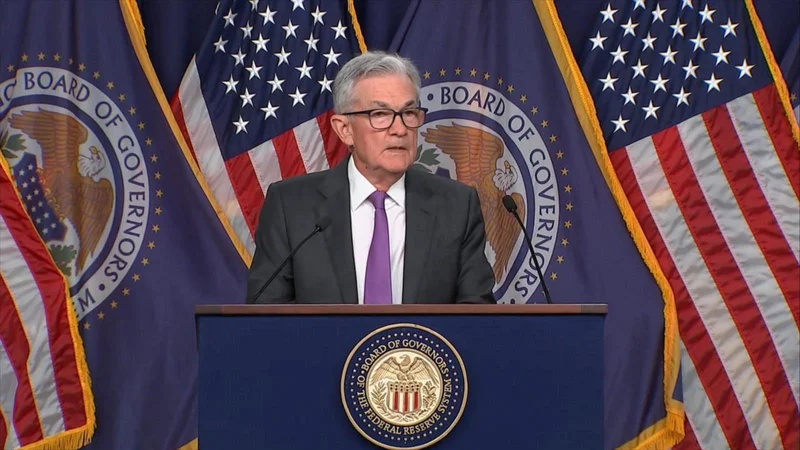
And let's be clear: we're not talking about a return to the zero-interest rate environment of the early pandemic. A quarter-point cut would bring the Fed's benchmark rate to between 3.5% and 3.75%. That's still a far cry from "free money." The idea that this cut will be some kind of magic bullet for the markets is naive.
The Fed's Internal Divide: Reading the Tea Leaves
The core problem is the Fed's internal disagreement. Some policymakers are more concerned about containing inflation, while others prioritize jolting the labor market. As Villanova University's John Sedunov put it, "The Fed is fighting with this idea: Do we push inflation more toward our goal or do we do something about the job market?" This is not a consensus. The Fed is divided over cutting interest rates. Here's why that matters.
But what’s really going on behind closed doors? We have to look at who's saying what. Williams and Daley, both seen as allies of Chair Powell, have signaled openness to a cut. Joseph Gagnon, a former Fed official, noted that their statements carried significant weight, suggesting Powell might be leaning in that direction. Goldman Sachs' Jan Hatzius even suggested the September jobs report "may have sealed" a cut at the December meeting.
Pantheon Macroeconomics analysts Samuel Tombs and Oliver Allen went even further, arguing that Williams' words essentially guarantee a cut, given his voting record and close relationship with Powell. This is where the analysis becomes less about data and more about interpreting Fed-speak, which is an art form in itself.
The Signal-to-Noise Ratio Is Terrible
The market's obsession with every Fed utterance is, frankly, exhausting. We're parsing every word, trying to divine the future from vague pronouncements. The reality is, the Fed is just as uncertain as the rest of us. They're reacting to the same data, trying to balance competing priorities. The idea that they have some secret playbook is a comforting illusion.
The Fed is caught in a bind. September's payroll numbers may have surprised to the upside, but October is what mattered. That data is now delayed until after the FOMC meeting, the Fed's rate-cut path has more question marks. The available economic data has supported a December cut, but given the Fed's cautious bent, it may choose to wait until it has more numbers in hand.
So, What's the Real Story?
Expect more volatility. The Fed's internal debate, coupled with incomplete data, means we're in for a bumpy ride. December is not a sure thing, and anyone who tells you otherwise is selling something.